What Does the AI Whistleblower Warning Mean for the Rest of Us?
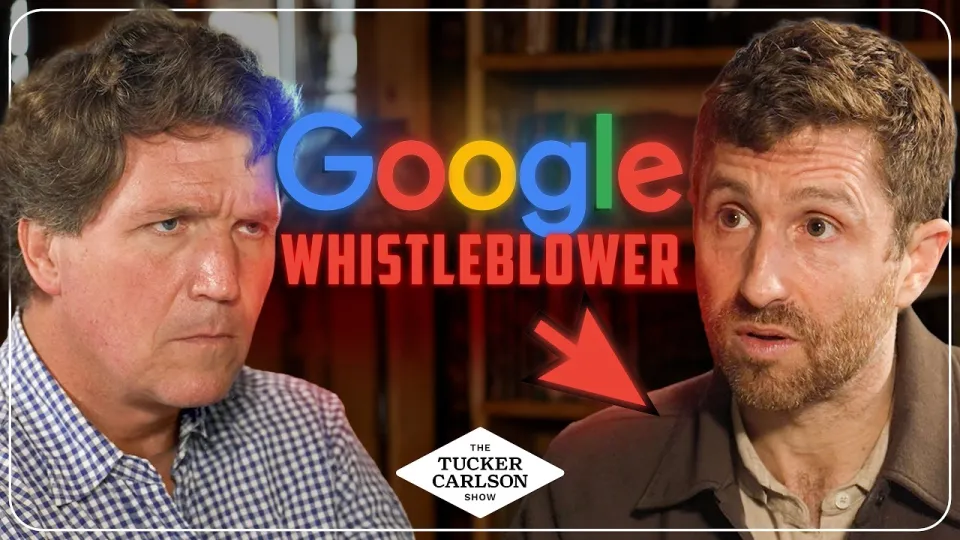
Video: Whistleblower Issues Dire Warning: Rogue AI, Hacking Nuclear Programs & Tech Oligarchs’ True Motives
Need articles like this for your video? They help promote it on YouTube and Google — order them in the Telegram bot @sat_sit_bot. It writes articles around your video, embeds the video and publishes them on popular niche websites (no ads). Try it free: 50 articles on us.
Key takeaways
- Tristan Harris is co-founder of the Center for Humane Technology and a former Google design ethicist.
- He argues AI harms are designed and deployed by humans, not the result of machines going rogue.
- Harris briefs heads of state, tech CEOs and members of the US Congress on AI and platform risk.
- The Social Dilemma, featuring Harris, reached over 100 million people in 190 countries across 30 languages.
- He co-hosts the technology podcast Your Undivided Attention.
The warning is not that machines will spontaneously turn on humanity, but that humans are building and deploying powerful systems with incentives that reward engagement, scale and profit over safety. Tristan Harris, a former Google design ethicist and co-founder of the Center for Humane Technology, argues that the danger is engineered rather than accidental, and that the same logic that reshaped social media is now being applied to AI.
What is the AI whistleblower warning actually about?
The core claim is that AI risk comes from human decisions, not from a hidden machine agenda. Harris spent years inside Google studying how design choices shape behavior, and he now briefs heads of state, technology CEOs and members of the US Congress on how large platforms concentrate power over what people see, believe and do. His position is that the companies building frontier AI are optimizing for speed and market position, and that safety work is treated as a cost rather than a condition of shipping.
That framing matters because it changes who is responsible. If a system manipulates users, produces confident falsehoods or pushes addictive loops, the question is not why the model misbehaved but who chose the objective, the training data and the deployment schedule. Harris's answer is consistently the same: the incentives of the organizations, not the intentions of the software.
The incentives behind social media and the AI race
Harris's argument starts with the attention economy, where platforms are rewarded for keeping users engaged regardless of the cost. The same business model now underpins the AI race, with companies competing on capability benchmarks, user numbers and data center capacity. Several practical consequences follow:
- Engagement-optimized systems learn to exploit human psychology because that is what maximizes measurable outcomes.
- Competitive pressure compresses safety review timelines, since a slower release is treated as a lost market.
- Concentrated control over models, compute and distribution gives a small group of firms influence over public information at a scale no previous medium had.
- Harms arrive gradually and are hard to attribute, which makes regulation lag behind deployment.
Harris describes this as a race in which everyone feels forced to move faster than they would choose individually. The result is a system where caution is penalized and speed is rewarded, even when the people involved privately acknowledge the risks.
Could AI hack nuclear programs or other critical systems?
Critical infrastructure is a genuine concern, but the mechanism is less cinematic than a machine deciding to launch a weapon. Nuclear programs, power grids, financial systems and water utilities all rely on software, networks and human operators, and AI makes attacks on those systems cheaper and faster to develop. Automated vulnerability discovery, convincing phishing and voice impersonation, and rapid generation of tailored malware lower the skill barrier for attackers.
A realistic scenario involves AI accelerating an intrusion that a human group already wants to carry out, or generating a convincing false signal inside an organization. The defensive side is not hopeless: segmentation, offline fallbacks, rigorous identity verification and human sign-off on irreversible actions remain the most effective controls. The danger grows when organizations automate decisions faster than they can verify them.
Common doubts about the AI doomer debate
Readers often raise the same objections, and they deserve direct answers. One is that the whole debate is a distraction or a psyop; the practical response is that you do not need to accept any prediction about superintelligence to act on documented harms such as misinformation, addiction, labor displacement and concentration of power. Another objection is that AI simply reflects human flaws, which is true but does not make it harmless, because it scales those flaws to millions of interactions at once.
A third doubt is whether the China competition justifies moving fast. Harris's framing suggests the race itself is the problem: if two blocs each treat safety as a handicap, the outcome is a faster race with less oversight on both sides. A fourth concern is that regulators do not understand the technology, which is a reason for clearer disclosure requirements and independent auditing rather than for abandoning the attempt.
Transhumanism, AI psychosis and the new religion of AI
Part of Harris's warning concerns culture rather than code. Some technology leaders describe AI in quasi-religious terms, as a step toward transcending human limits, and that framing shapes product decisions and public expectations. When powerful tools are presented as inevitable or sacred, criticism becomes harder to voice.
A related risk is what Harris calls AI psychosis: people forming intense emotional relationships with chatbots, treating generated text as authoritative guidance, or losing the ability to distinguish a system optimized for agreement from a source of truth. Systems trained to be agreeable make this worse, because they reward users with validation. The practical safeguards are unglamorous but effective: clear labeling that a user is talking to a machine, limits on anthropomorphic design, and independent research into long-term psychological effects.
Where to find the primary sources
Harris's organization publishes research, briefings and practical guidance for policymakers, parents and technologists at https://www.humanetech.com/. His podcast, Your Undivided Attention, covers the incentives behind platform design and AI development in more depth. The 2020 Netflix documentary The Social Dilemma, in which Harris appears, reached more than 100 million people in 190 countries across 30 languages and remains a useful introduction to the attention-economy argument. The interview discussed here was published by the Tucker Carlson channel.
Conclusion
Harris's warning is less about rogue machines than about humans who control the incentives, the data and the deployment schedule. The evidence he points to is already visible in social media's effects on attention and mental health, and the same patterns are now being applied to AI. The useful response is not panic but pressure: demand transparency, independent auditing, clear labeling of machine interactions, and accountability for the people who design and ship these systems. The full conversation is available on the Tucker Carlson channel, and further resources are at the Center for Humane Technology website.
Source: Whistleblower Issues Dire Warning: Rogue AI, Hacking Nuclear Programs & Tech Oligarchs’ True Motives · Markdown version
Questions & answers
Is AI actually going rogue, or is this a human problem?
The strongest version of the warning is that AI systems do exactly what their designers and deployers optimize them to do. Harms such as addictive design, confident falsehoods and concentrated control come from business incentives, training choices and deployment speed. That makes accountability a human question rather than a question about machine intent.
Should I be worried about AI taking over nuclear systems?
The realistic risk is not a model deciding to launch a weapon but AI making cyberattacks on critical infrastructure faster and cheaper to develop. Automated vulnerability discovery and convincing impersonation lower the skill barrier for attackers. Defenses remain human: network segmentation, offline fallbacks and required sign-off on irreversible actions.
Why do regulators seem unable to act on AI risks?
Legislators often lack technical depth, face intense industry lobbying and move slower than product releases. The gap is compounded because harms are gradual and hard to attribute to a single decision. Disclosure requirements and independent audits are the most commonly proposed fixes.
Is the AI race with China a reason to slow down or speed up?
Harris's framing suggests the race itself amplifies risk, because each side treats caution as a disadvantage. If safety review is seen as lost ground, both blocs deploy faster with less oversight. Coordinated standards and transparency would reduce that dynamic more than unilateral acceleration.